
Fascia
-
Fascial Integration in the Equine Forelimb: A Dynamic Shock-Absorption System
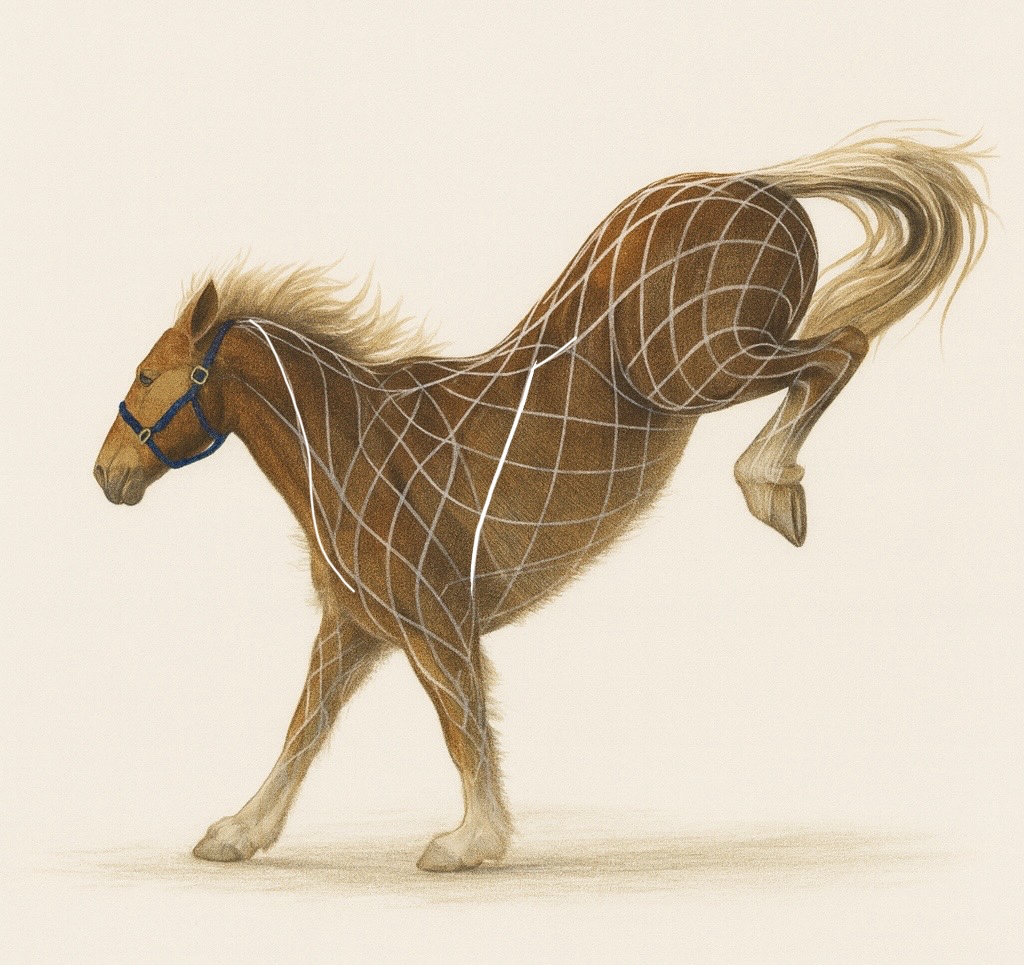
The equine forelimb is not designed to function as a rigid weight-bearing column. Instead, it operates as a fascially integrated, dynamic shock-absorption system that manages impact forces, adapts to terrain, and protects the axial skeleton from repetitive concussive stress. Because the…
-
Understanding Central Nervous System (CNS) Fatigue in Horses
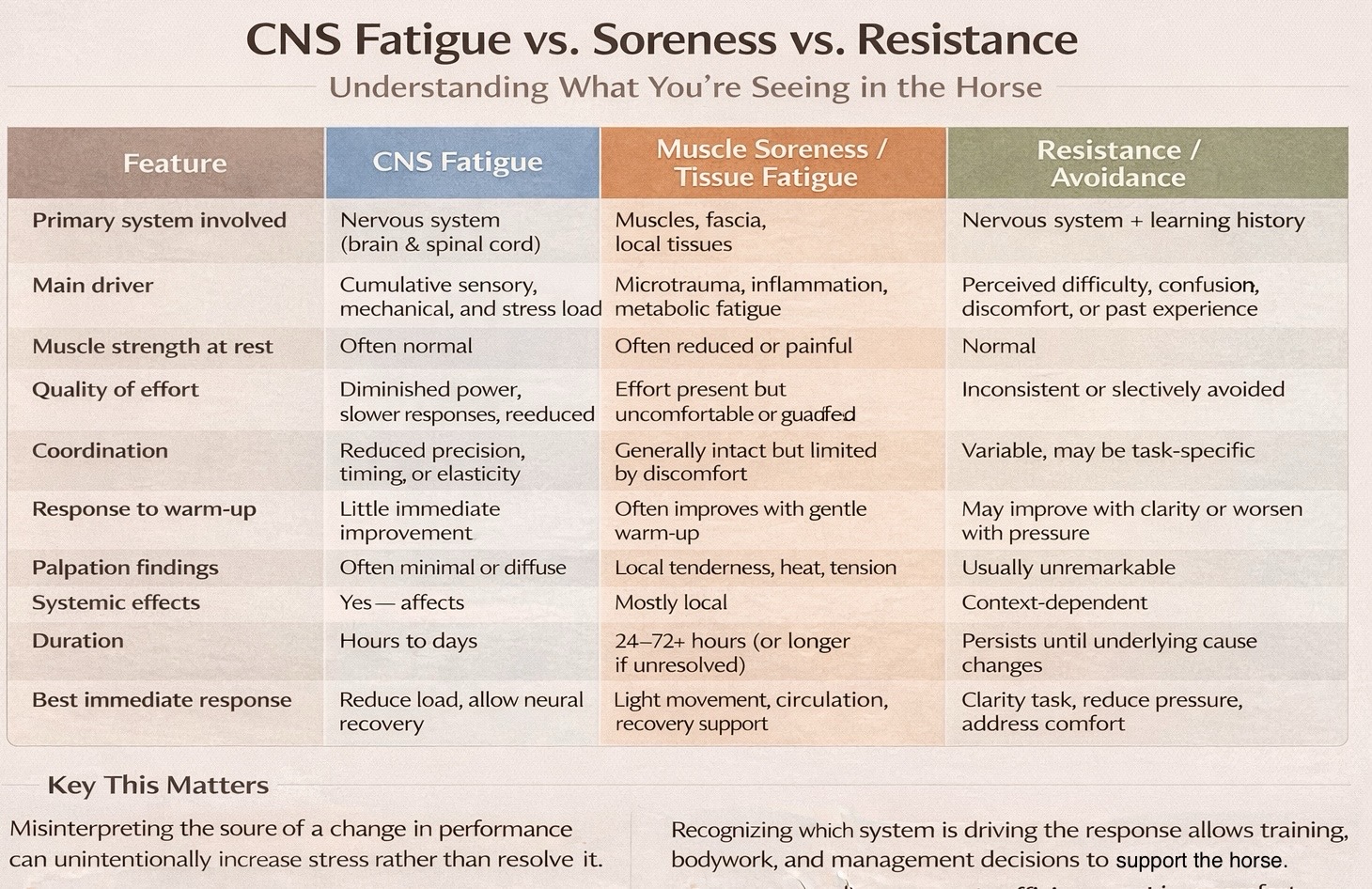
Central nervous system (CNS) fatigue refers to a temporary reduction in the nervous system’s ability to fully activate muscle. In simple terms, the muscle is still capable of producing force, but it is no longer receiving a full-strength signal from the…
-
Pain Isn’t the Enemy

Pain and tension are not mistakes within the body. They are part of the horse’s protective intelligence. When a horse holds tension, it is often responding to perceived threat—whether that threat comes from pain, instability, weakness, or uncertainty within the system.…
-
The Pons: A Quiet Regulator of Posture, Load, and Movement in the Horse and How Gentle Massage Therapy Can Positively Affect it

When we think about movement, training, or performance in horses, attention is often placed on muscles, joints, and conditioning. Yet much of how a horse organizes posture, accepts load, and transitions between effort and ease is governed deeper in the nervous…
-
Integrins in Fascia: How Cells Respond to Touch and Load
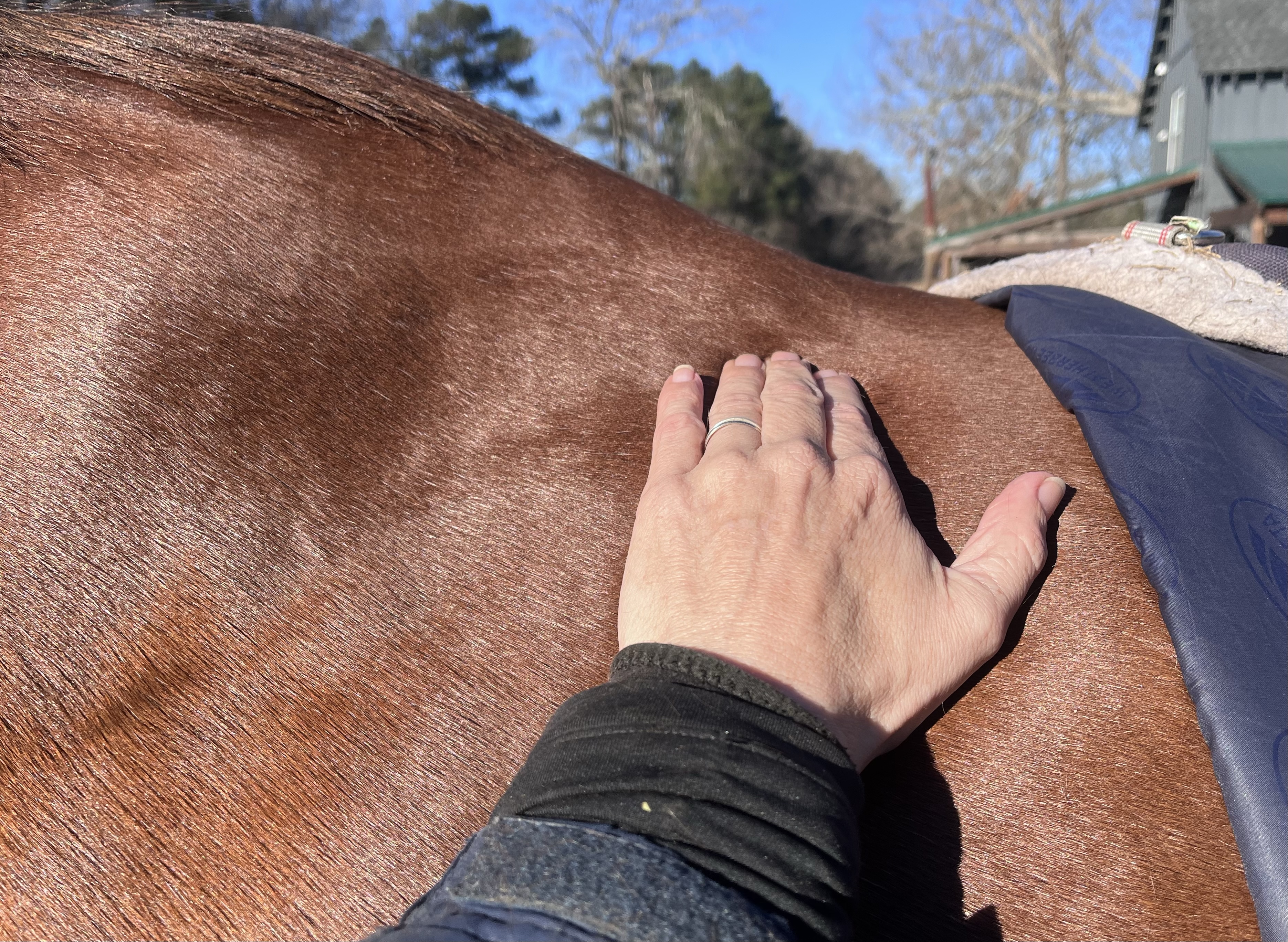
When we think about how touch, movement, or bodywork influences the body, the nervous system is often the first explanation that comes to mind. Nerves are fast, electrical, and dramatic. They help explain immediate changes in muscle tone, reflexes, and perception.…
-
Fascial Integrins: Integrins, Adaptation, and Why Some Bodies Change Slowly
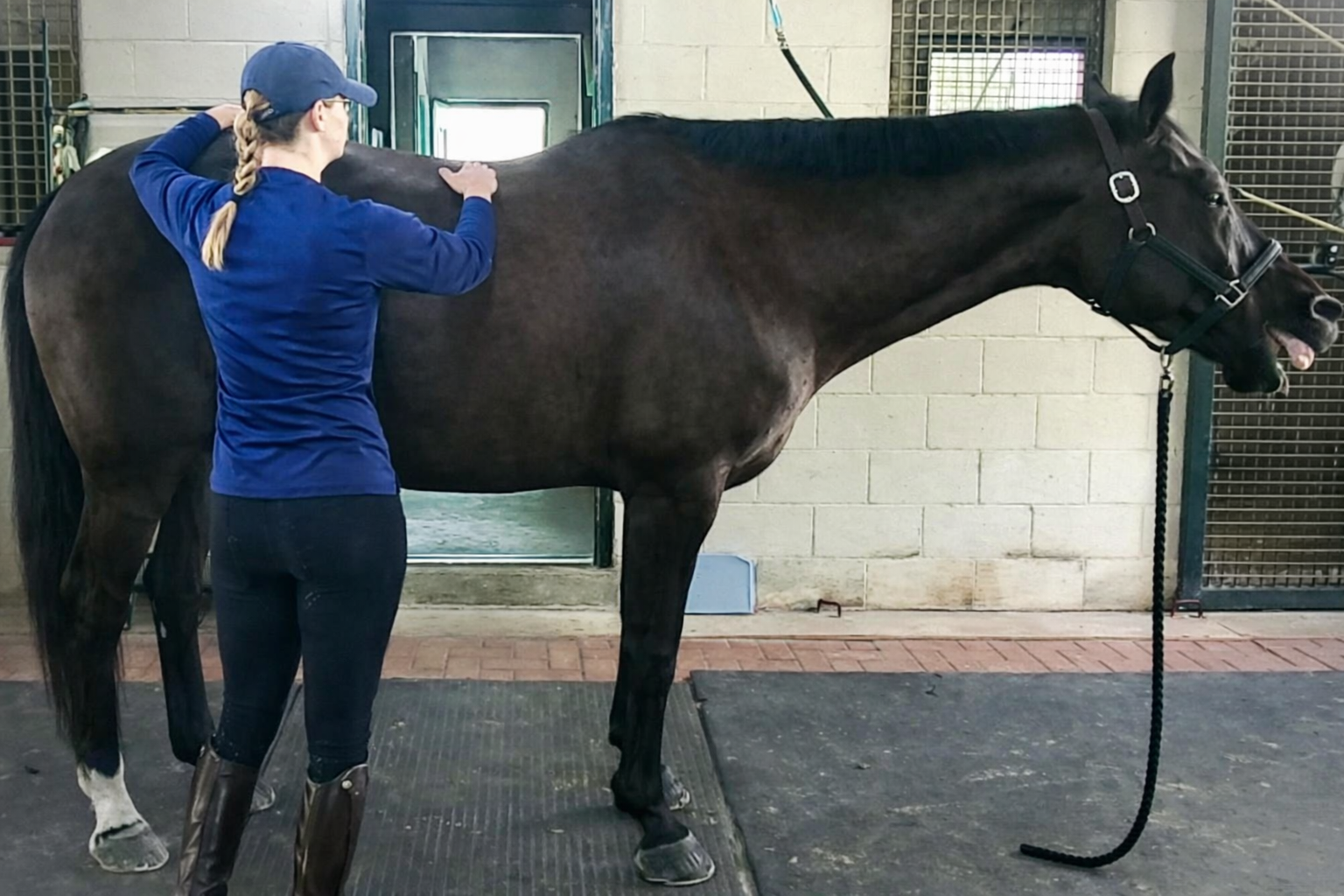
Understanding integrins helps explain how mechanical input is translated into cellular change. These specialized proteins act as bridges between the outside environment of the cell and its internal structure. Through them, touch, load, and movement influence tissue behavior over time—not through…
-
Dermatomes, Myotomes, and Fasciatomes in the Horse
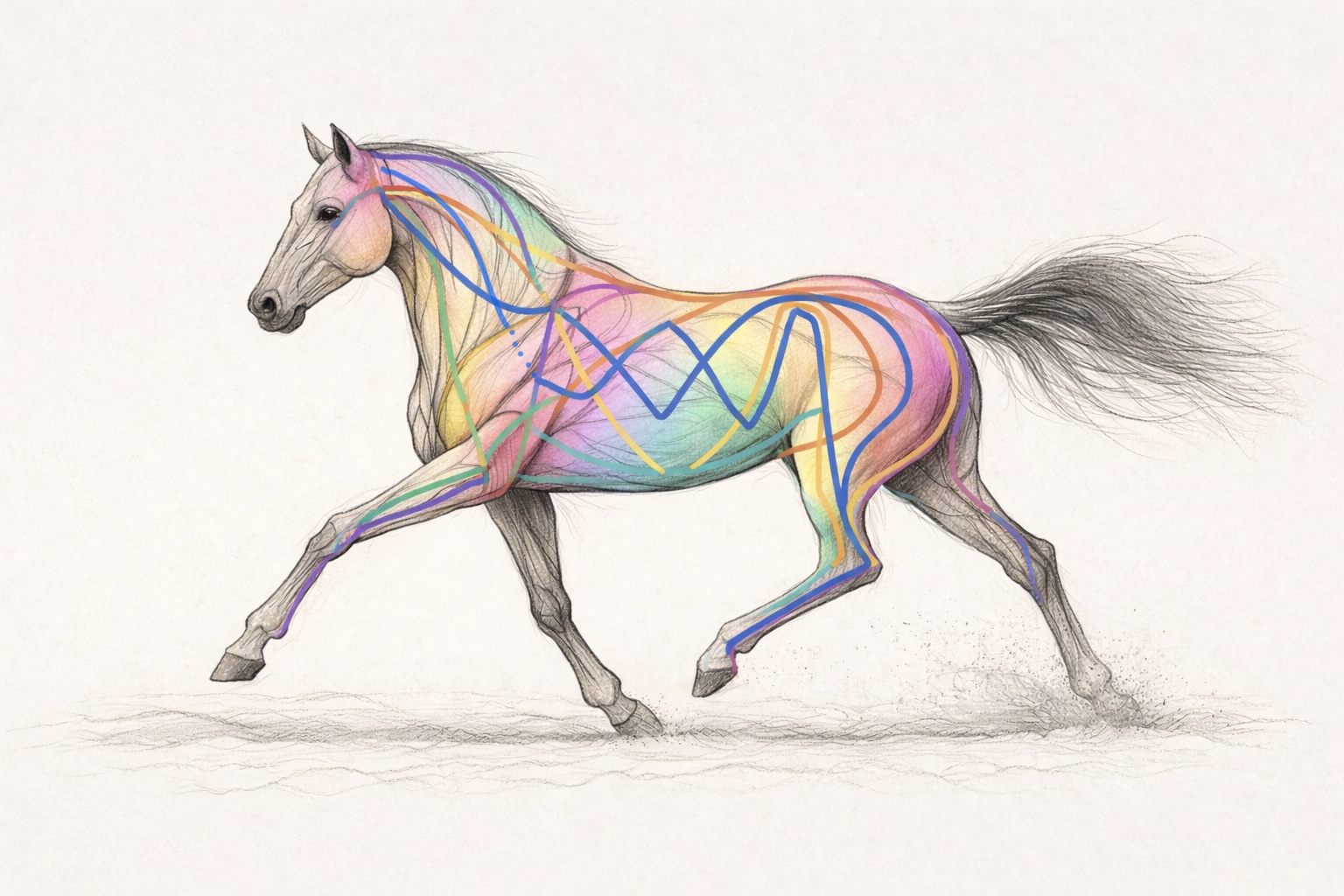
Pain, Proprioception, and Movement For many years, pain and sensation in animals were explained primarily through the concept of dermatomes—regions of skin supplied by specific spinal nerve roots. While this model is helpful, it does not fully explain the complex, diffuse…
-
Recognizing The Importance of Fascial Release
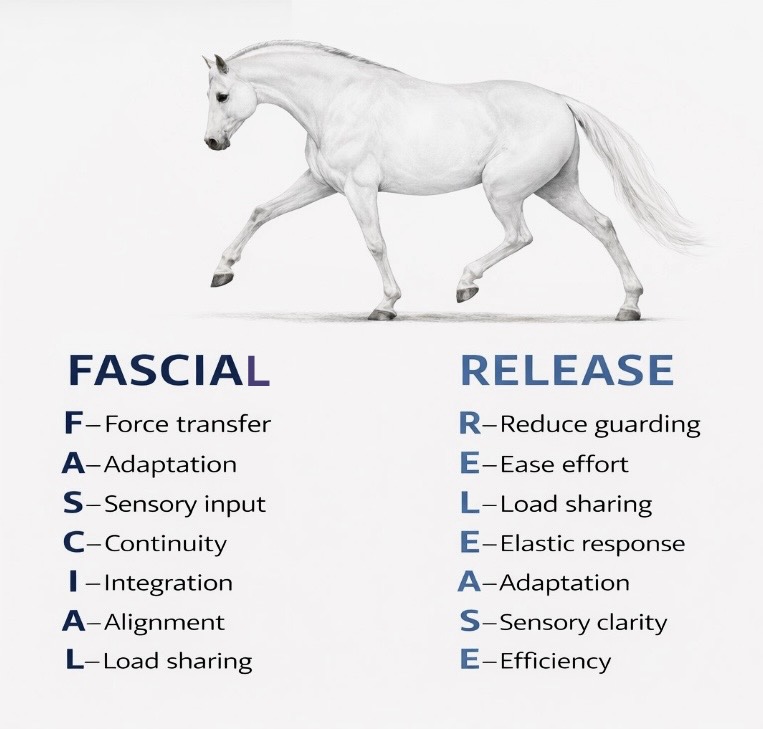
As research continues to advance, fascia is increasingly recognized as one of the most important factors influencing how a horse moves, adapts, and manages load. Rather than functioning as isolated parts, the horse’s body operates as a deeply integrated system—and fascia…
-
Why Popping Sensations Happen in Horses: Understanding Tissue Sounds During Movement and Bodywork
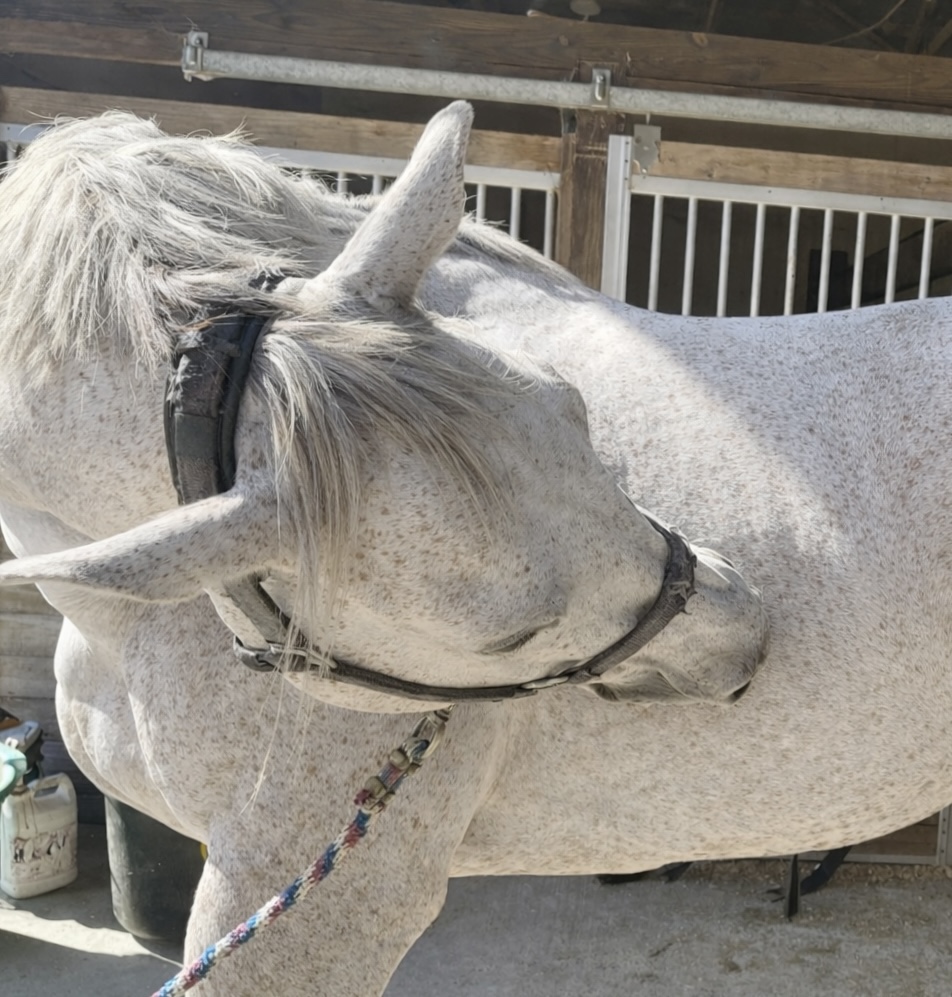
During movement or bodywork, horses may occasionally produce popping, snapping, or shifting sensations within their tissues. These sounds can feel surprising, but they are not always coming from joints—and they are not automatically a sign of damage. Many structures in the…
-
The Body Creates Tension First: Why and What You Can Do About It
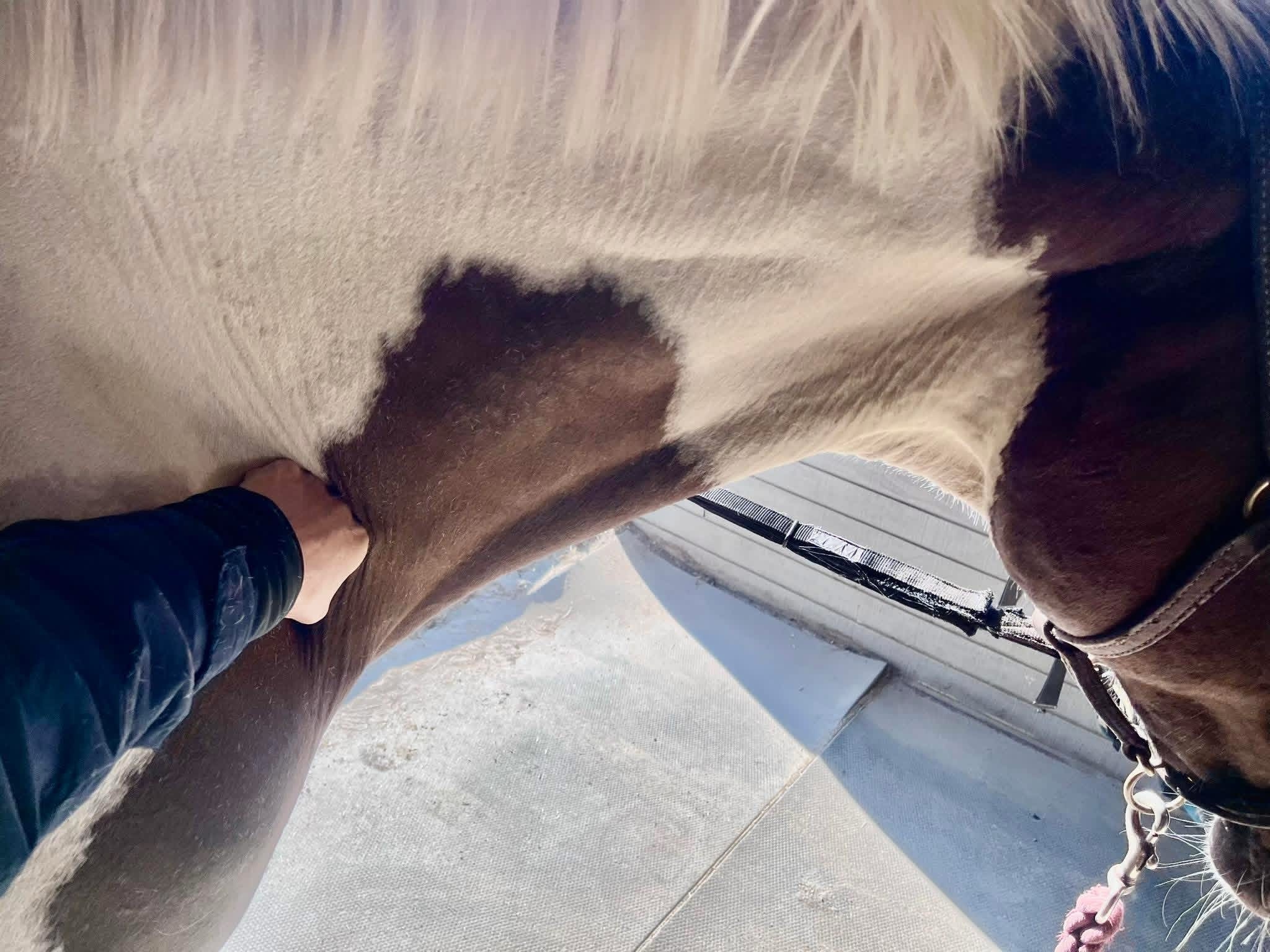
When muscles and fascia are stressed—through exercise, repetitive use, sudden load, or injury—the body’s first priority is stability and safety. Before tissues can strengthen or adapt structurally, the nervous system responds by increasing muscle tone and fascial tension. This initial increase…