
Equine Massage
-
Trigger Points: Sarcomere Contraction, Ischemia, and Pain Signaling – Why massage therapy is the most effective way to address them

Trigger points are often described as “knots” in muscle, but this description does not accurately reflect what is occurring in the tissue. Trigger points are not hardened lumps or structural defects. Instead, they are localized neuromuscular events involving sustained…
-
The Limbic System in Massage and Bodywork: Why Emotional State Shapes Physical Response

In massage and bodywork, results are influenced by far more than technique or pressure. They are shaped by the horse’s limbic system—the network in the brain responsible for emotion, memory, arousal, and the sense of safety. Understanding the limbic system helps…
-
Crackle and Pop – How joint stress, trigger points, and proprioception are connected — and how massage therapy supports joint health

Horses, and humans, sometimes produce audible joint sounds—pops, clicks, or releases—during movement, stretching, or after bodywork. These sounds can concern owners, especially when they occur in frequently used or stressed areas such as the neck, shoulders, stifles, or hocks. Scope clarification:…
-
Soothing Touch Improves Immune System Function

The horse’s body functions as an integrated system where the nervous system, immune system, and musculoskeletal tissues constantly communicate with one another. Because of this close relationship, the way a horse experiences touch can influence more than muscle tone or movement—it…
-
Fascial Integration in the Equine Forelimb: A Dynamic Shock-Absorption System
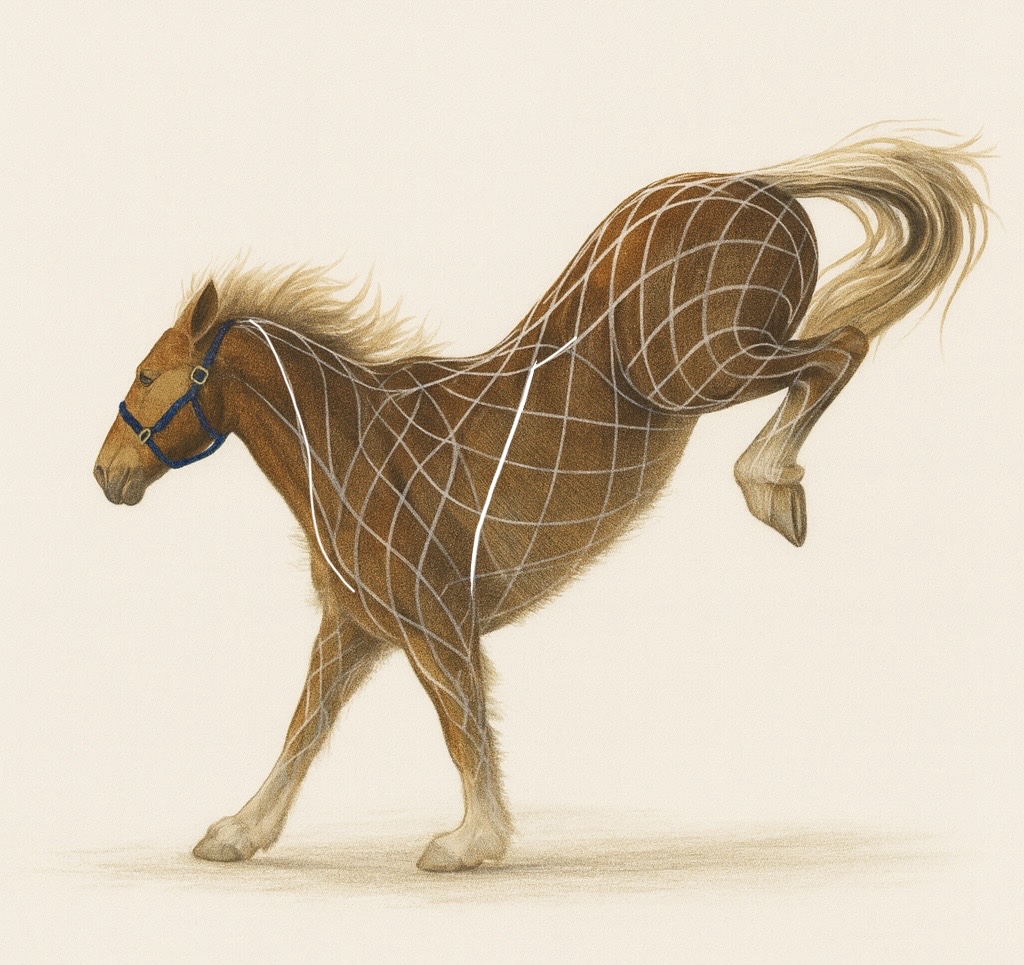
The equine forelimb is not designed to function as a rigid weight-bearing column. Instead, it operates as a fascially integrated, dynamic shock-absorption system that manages impact forces, adapts to terrain, and protects the axial skeleton from repetitive concussive stress. Because the…
-
Understanding Central Nervous System (CNS) Fatigue in Horses
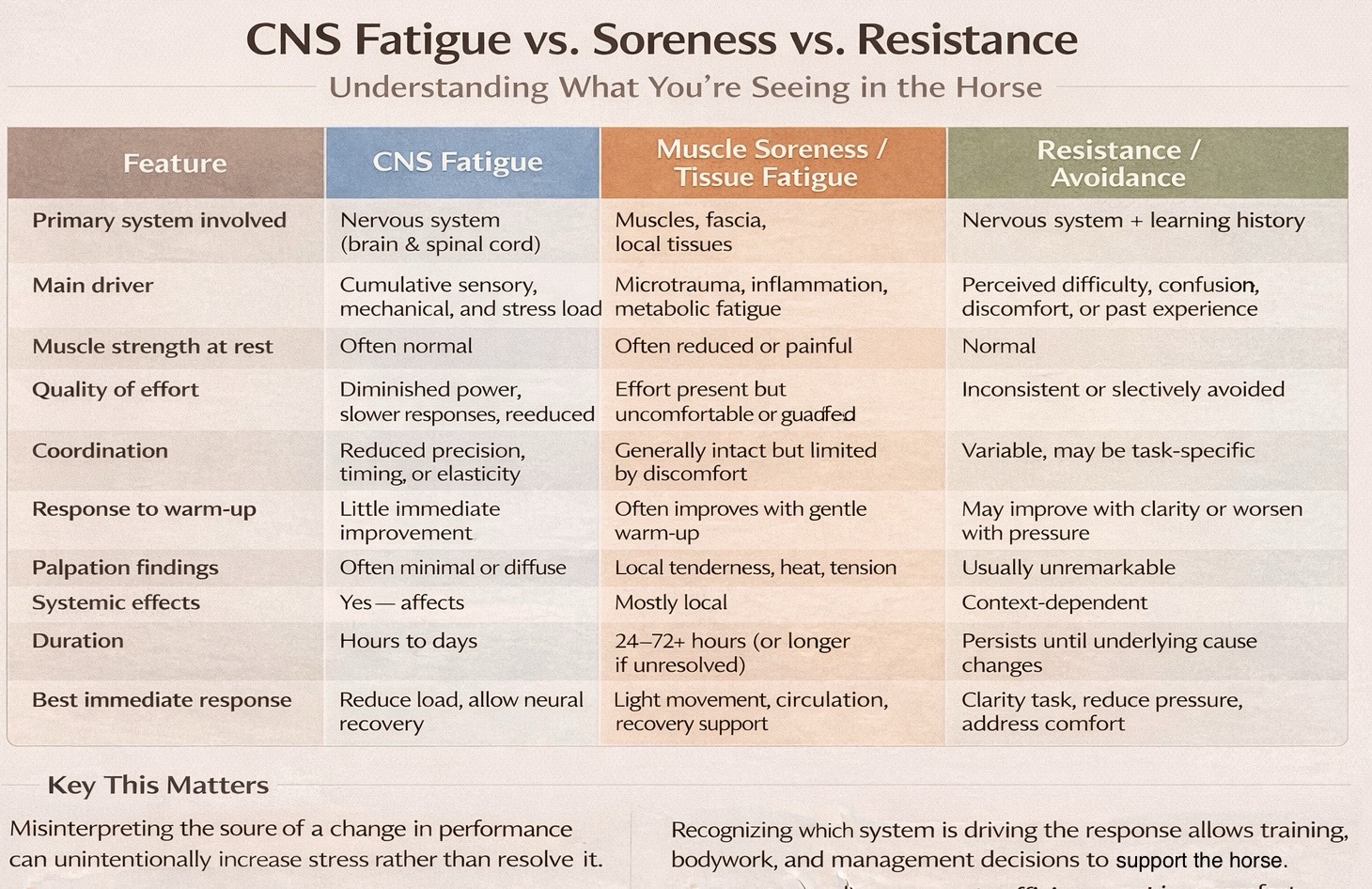
Central nervous system (CNS) fatigue refers to a temporary reduction in the nervous system’s ability to fully activate muscle. In simple terms, the muscle is still capable of producing force, but it is no longer receiving a full-strength signal from the…
-
Pain Isn’t the Enemy

Pain and tension are not mistakes within the body. They are part of the horse’s protective intelligence. When a horse holds tension, it is often responding to perceived threat—whether that threat comes from pain, instability, weakness, or uncertainty within the system.…
-
Koper Equine’s First Book is Available

I’m excited to share that my first book, Puzzles & Play for Equine Bodyworkers, is now available on Amazon! This project has been a true labor of love, combining equine anatomy, movement, massage, fascia, and bodywork concepts into a fun, interactive…
-
The Pons: A Quiet Regulator of Posture, Load, and Movement in the Horse and How Gentle Massage Therapy Can Positively Affect it

When we think about movement, training, or performance in horses, attention is often placed on muscles, joints, and conditioning. Yet much of how a horse organizes posture, accepts load, and transitions between effort and ease is governed deeper in the nervous…
-
Comparing PEMF, Prosix Proprioceptive Bands, and Massage Therapy

Effects on Stress Regulation and Salivary Cortisol in Horses As equine wellness modalities expand, understanding how different interventions influence stress physiology, nervous system regulation, and behavior is essential. Salivary cortisol is commonly used as a marker of HPA-axis activity, offering insight…